Self-Regulation Tools
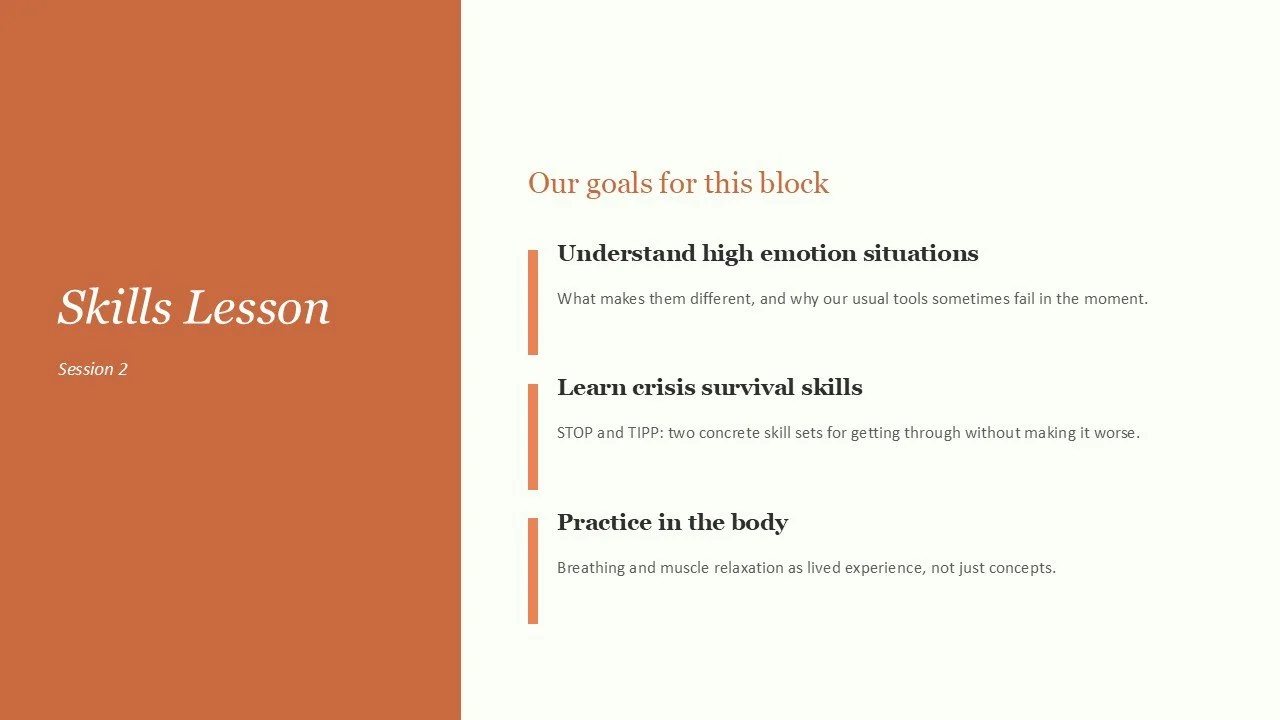
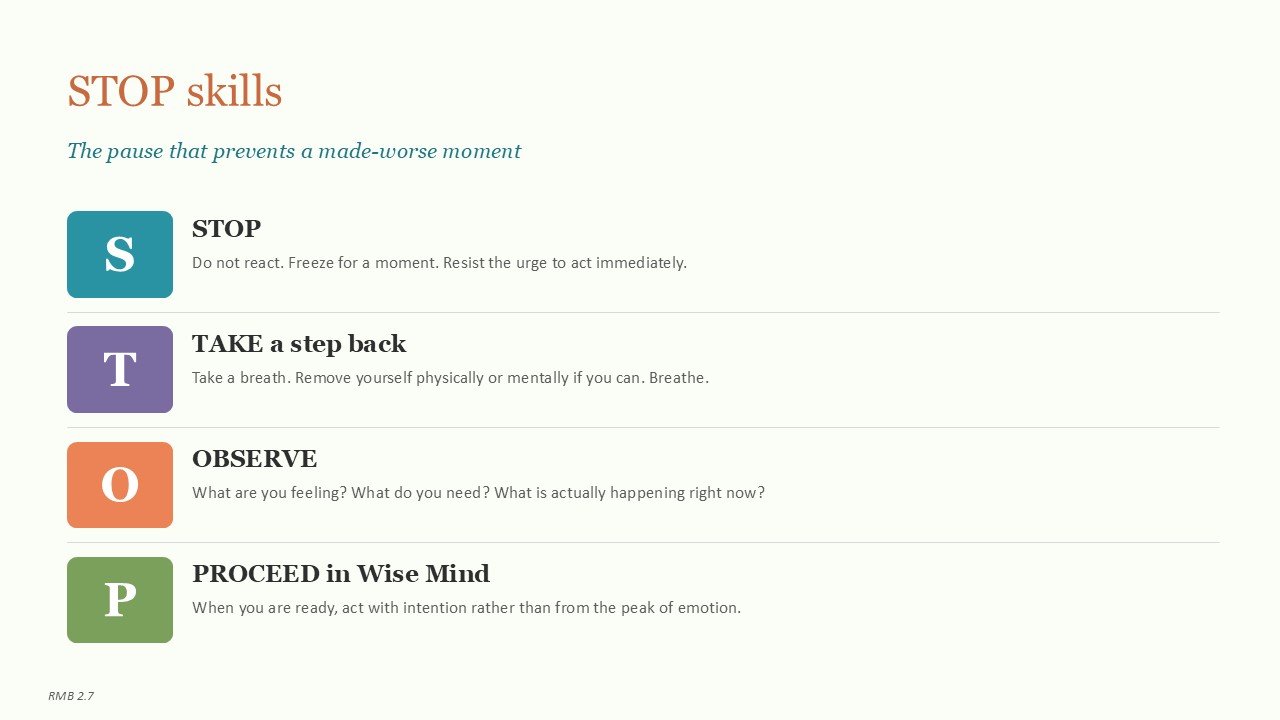
S T O P
A four-step pause for high-emotion moments
When emotion is high and the thinking brain goes offline, STOP gives you a pause before you act.
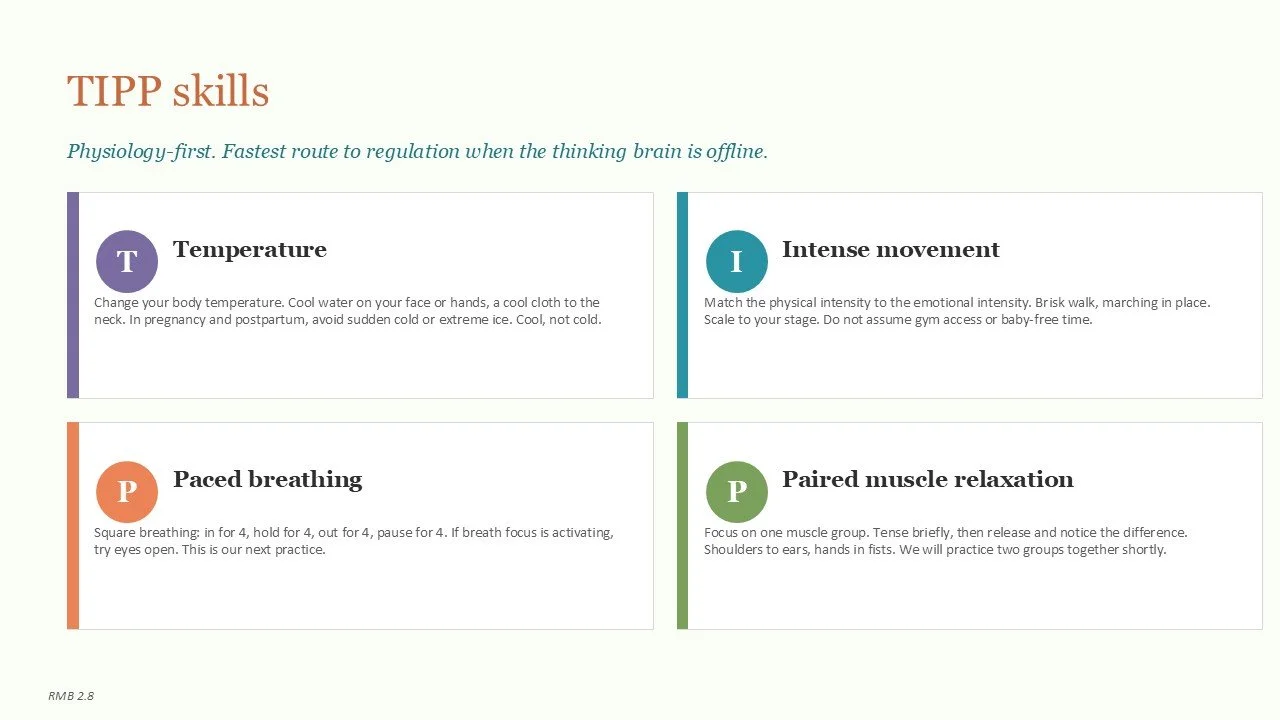
T I P P
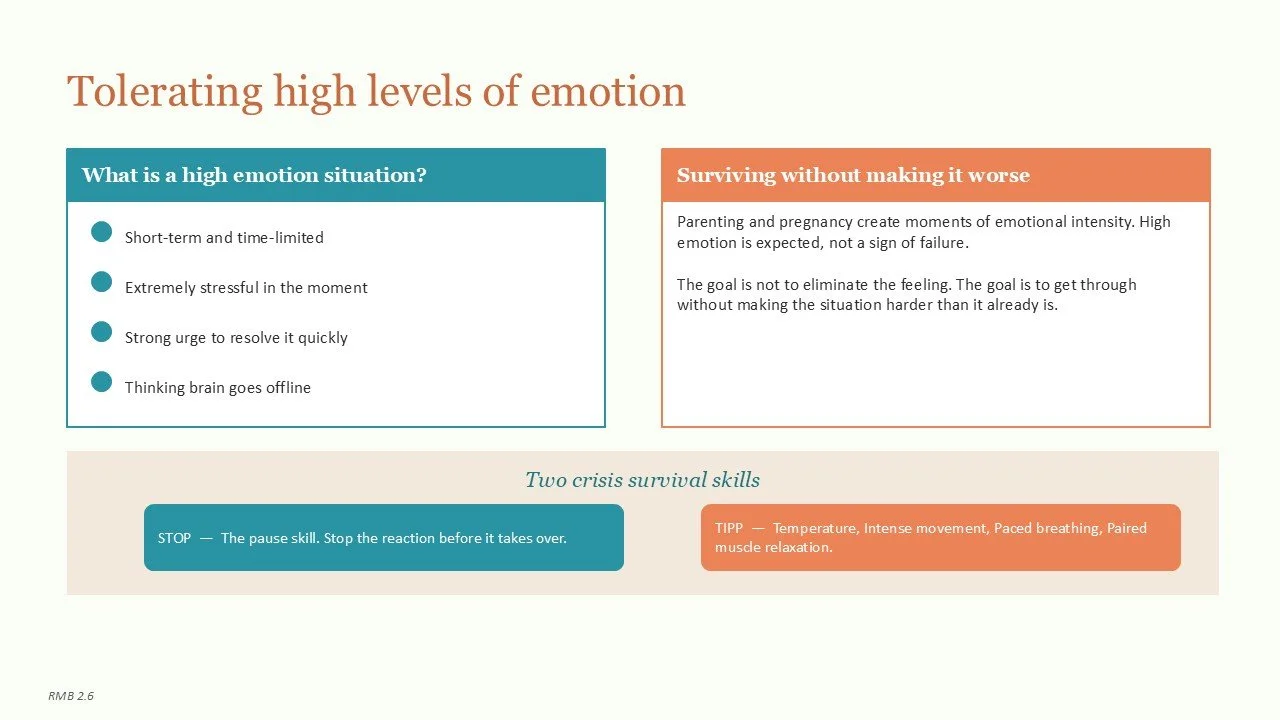
Physiology-first regulation when the thinking brain is offline
Choose the technique most accessible to you right now. Open it and follow the steps.
- Splash cool water on your face, or hold your hands under cool running water.
- Apply a cool damp cloth to the back of your neck.
- Stay with it for 30 to 60 seconds.
- Notice any shift in your body, even a small one.
During pregnancy or postpartum, avoid sudden cold or ice. Cool, not cold, is enough.
- March briskly on the spot for 1 to 2 minutes.
- Take a fast walk, even just around the room or hallway.
- Do chair squats, jumping jacks, or vigorous arm circles.
- Match the physical intensity to the size of the emotion.
Scale to your current stage and capacity. Any movement counts. You do not need gym access or baby-free time.
If breath focus feels activating, try eyes open and focus on an object in the room instead.
Work through each sense at your own pace. Type what you notice in each field to move forward.
Look around slowly. Notice things you would not usually pay attention to: a shadow, a colour, the edge of something.
Physical sensations: the weight of your body, texture of fabric, temperature of the air, your feet on the floor.
Listen past the obvious sounds. Near and far. Constant and intermittent. What is in the background?
Take a gentle breath. Even faint scents count: air, skin, something from another room.
Whatever is present in your mouth right now. The absence of taste is something to notice too.
You just used all five senses to bring your attention into this moment. That is your nervous system finding its footing.
Take a slow breath. Notice if anything feels different from when you started.
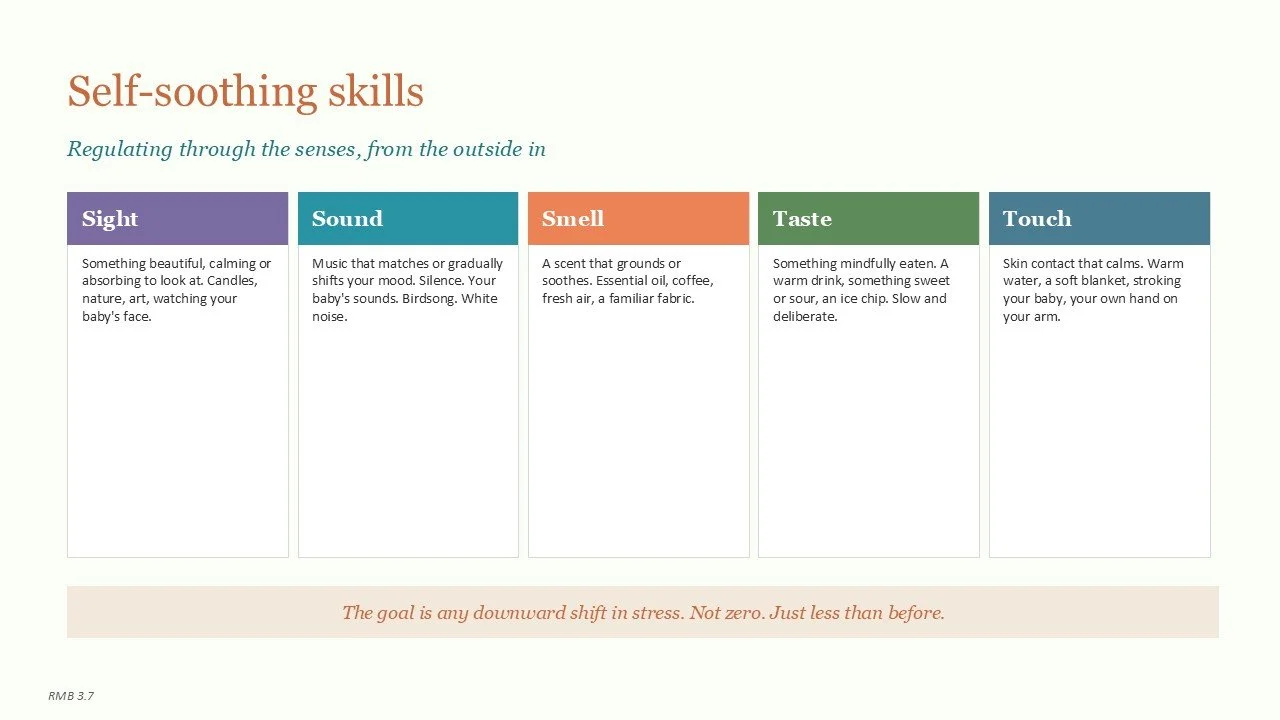
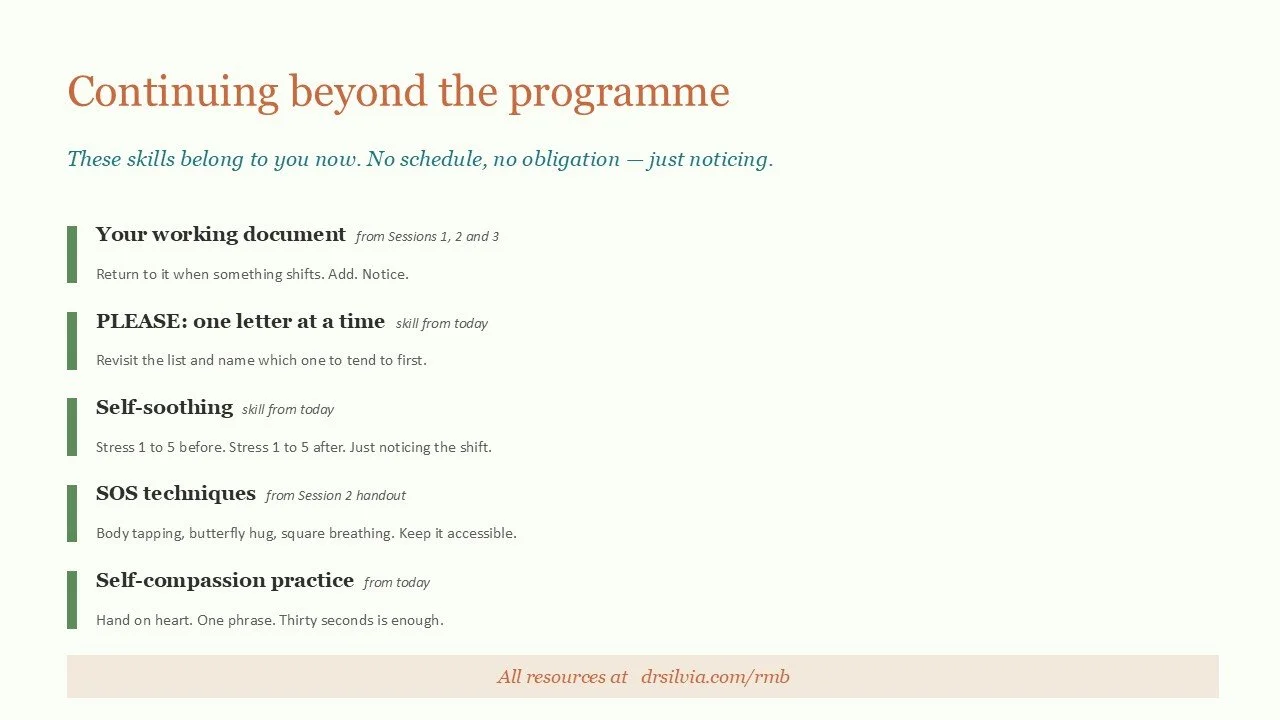
Self-Soothing
Regulating through the senses, from the outside in
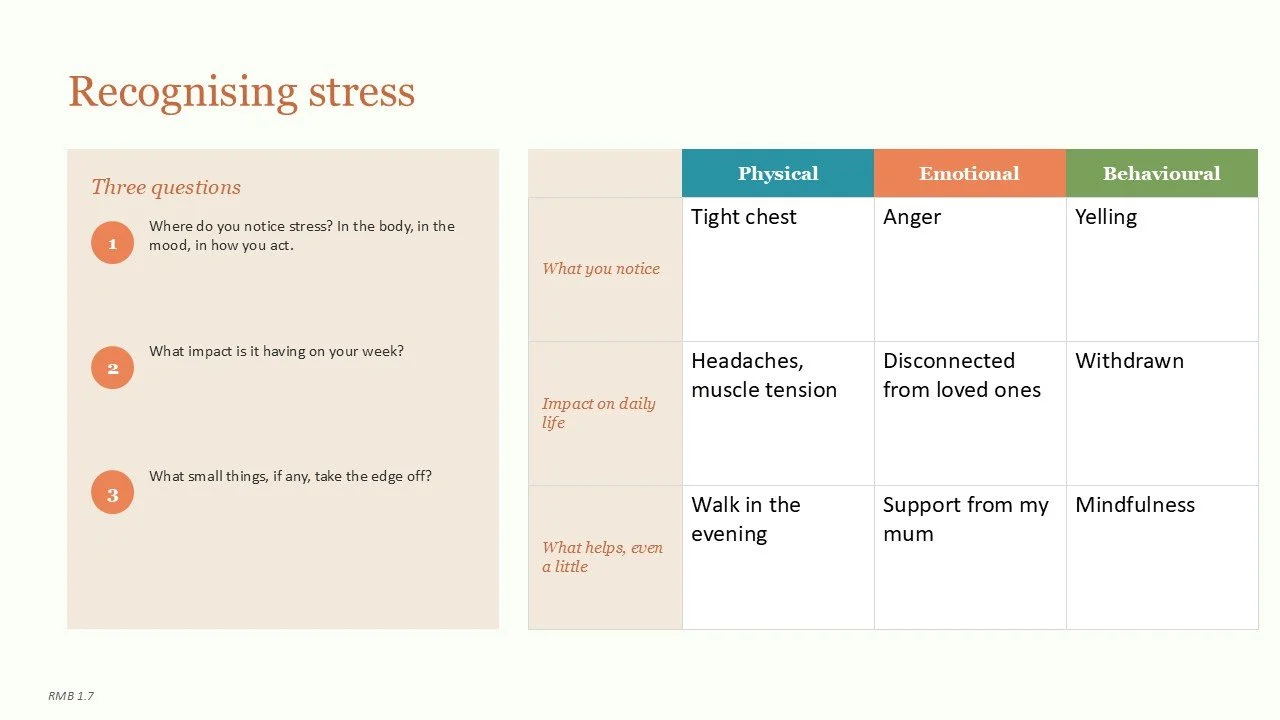
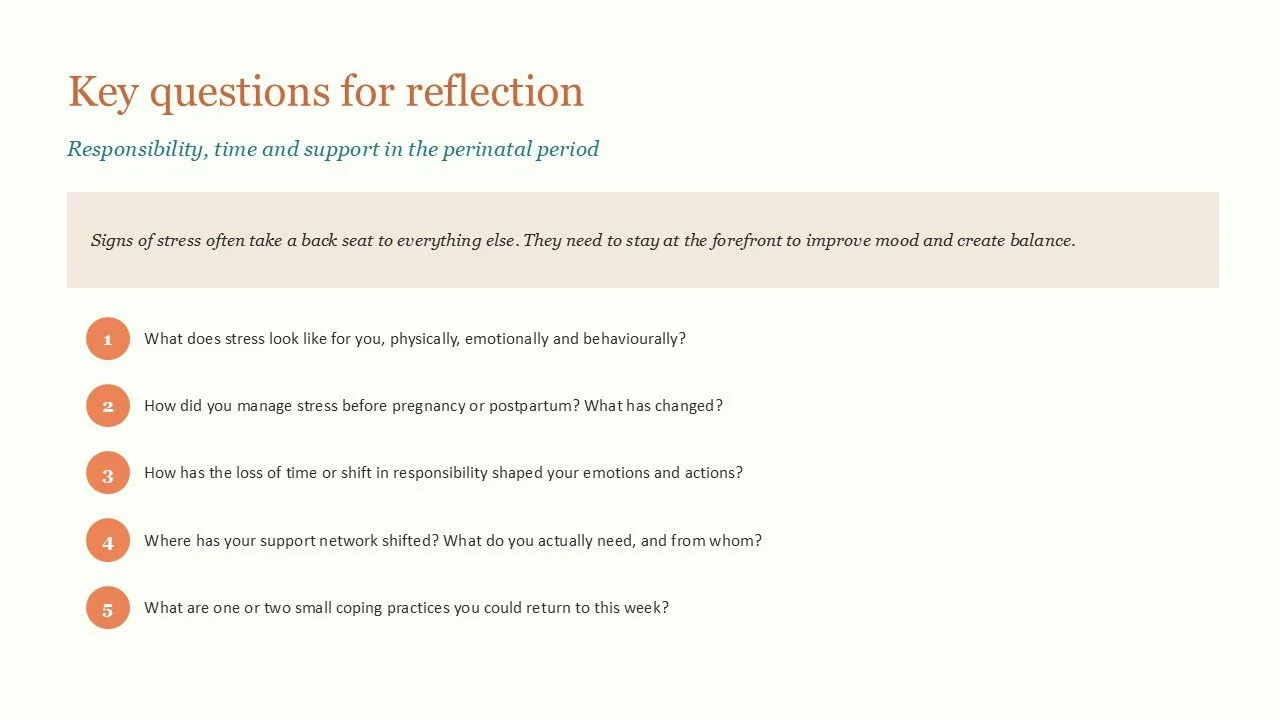
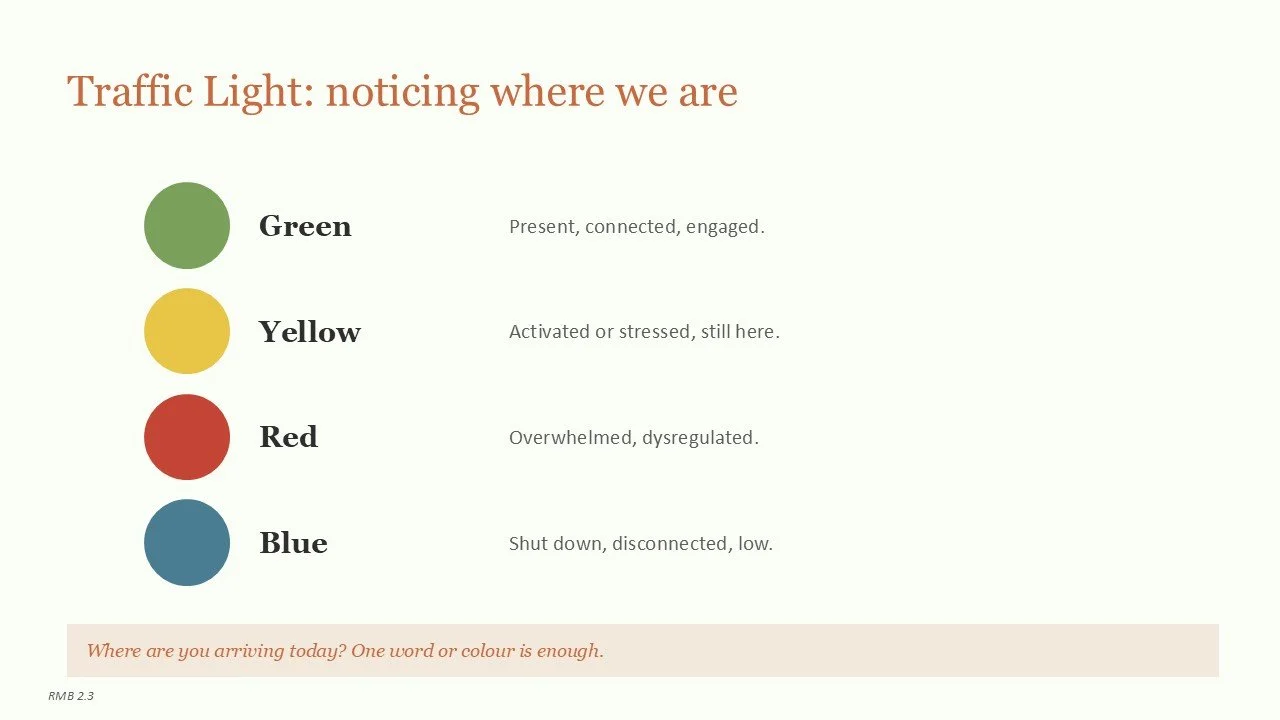
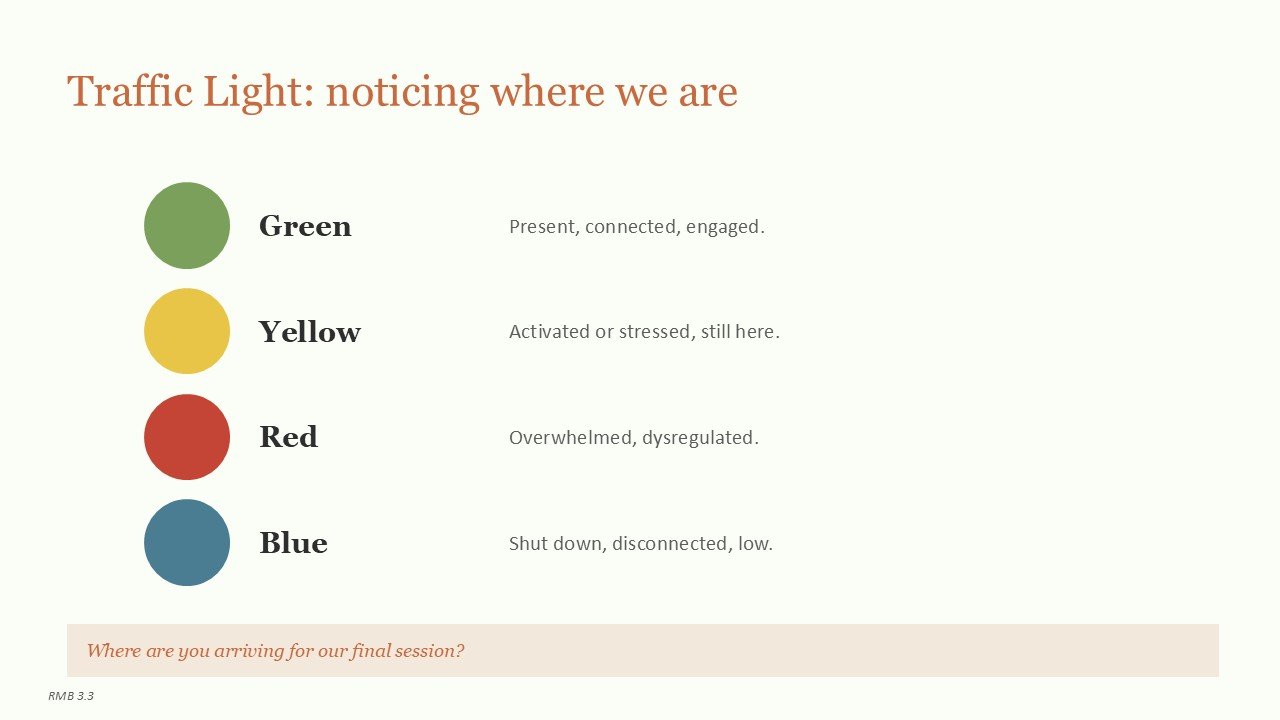
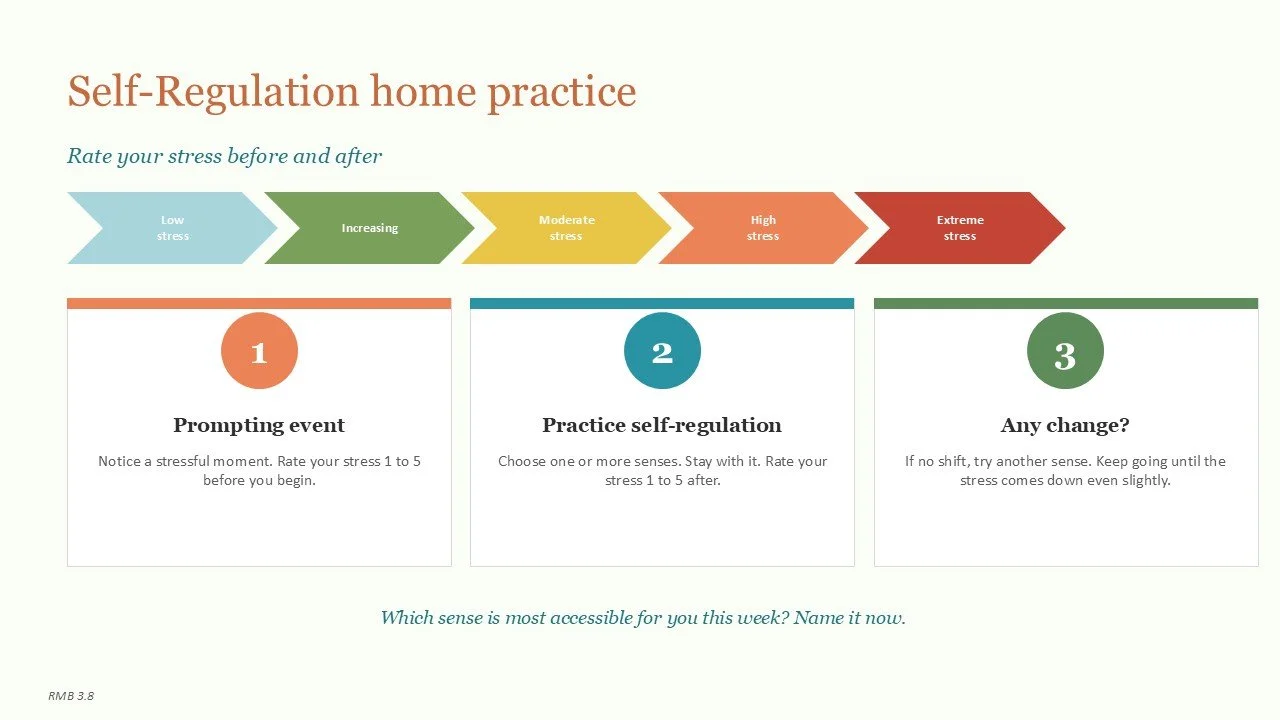
Before you begin — where is your stress right now?
- Candles or soft warm light
- Nature — a plant, the sky, moving water
- Something beautiful that requires no effort to take in
- Watching your baby's face
- Art, colour, or anything that draws your eye gently
Notice any small shift — even a slight softening is enough. That is your nervous system responding.
- Music that matches your mood, then gradually shifts it
- Deliberate silence — putting everything on pause
- Your baby's sounds, breathing, small noises
- Birdsong, rain, running water
- White or brown noise if everything else feels too much
Notice any small shift — even a slight softening is enough. That is your nervous system responding.
- An essential oil — lavender, eucalyptus, whatever you associate with calm
- Coffee, even if you are not drinking it
- Fresh air through an open window
- A familiar fabric — a blanket, a garment, something that carries a memory of ease
- Your baby's skin
Notice any small shift — even a slight softening is enough. That is your nervous system responding.
- A warm drink — tea, coffee, broth — held with both hands
- Something sweet, sour, or intensely flavoured that shifts your attention
- A small amount of something you enjoy, eaten slowly and deliberately
- Cold water, especially if you are feeling scattered or overwhelmed
- Something your body actually needs right now
Notice any small shift — even a slight softening is enough. That is your nervous system responding.
- Warm water — hands, face, or a shower if that is possible
- A soft blanket, texture that is comforting to hold or stroke
- Stroking your baby's hair or skin
- Your own hand on your arm, chest, or face — deliberate, slow
- Feet on the floor, noticing the ground beneath you
Notice any small shift — even a slight softening is enough. That is your nervous system responding.
Where is your stress now?
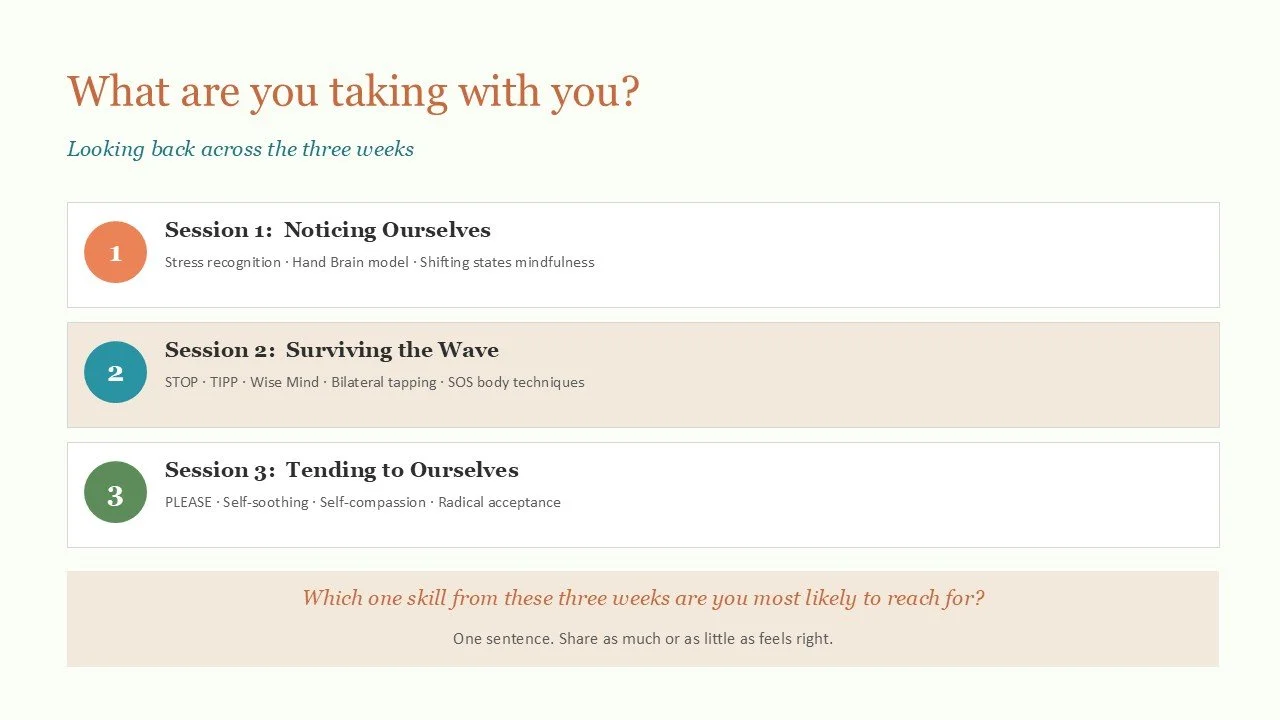
Week 1: Noticing Ourselves
Week 2: Surviving the Wave
Week 3: Surviving the Wave